
The Meeting Cadence Foundations Every Growing Business Needs

If your team is busy but progress still feels frustratingly slow, you might not have a people problem.
You might have an alignment problem.
As a business grows, the quick chats and informal updates that once kept everyone connected stop being enough.
Priorities drift. Issues sit unresolved. Decisions get stuck.
Before long, the founder becomes responsible for joining all the dots.
A simple meeting cadence can change this.
For most growing businesses, that means a focused weekly team meeting and a proper planning session every quarter. Together, they create operational clarity, improve team performance and help you scale without doing everything yourself.
Because no matter how aligned you are as people, you still need alignment.
What Is a Meeting Cadence?
A meeting cadence is the regular rhythm of conversations that keeps your team informed, focused and accountable.
For most growing businesses, the foundations are straightforward:
| Meeting | What you discuss | What you leave with |
|---|---|---|
| Weekly team meeting | Progress on current priorities, key business numbers, outstanding actions, emerging problems and decisions that need to be made | Clear actions for the week ahead, named owners, agreed deadlines and decisions on anything slowing progress. |
| Quarterly planning | Performance over the previous three months, what worked, what did not, recurring issues and what the business needs to focus on next. | A focused set of priorities for the next 90 days, with clear outcomes, ownership and measures for tracking progress. |
| Annual planning | The wider vision, financial goals, growth plans, team needs and the direction of the business. | A clear direction for the year, agreed business goals and a roadmap that guides each quarter’s priorities and decisions. |
The weekly meeting keeps the business moving.
Quarterly planning makes sure it is moving in the right direction.
Annual planning reminds everyone where you are trying to go in the first place.
You may need other meetings depending on your business. But if you are currently relying on scattered Slack messages and catching people “when you get a minute”, you should definitely start here.
Why Team Alignment Breaks Down During Growth
When your business is small, communication happens almost by accident.
You are close to the work. You hear the client conversations. You know what everybody is doing. If something changes, you can quickly tell the people who need to know.
Then the business grows.
There are more clients, more people and more moving parts. Team members begin taking responsibility for different areas, which is exactly what you want. But it also means nobody has the complete picture anymore.
Unless you create a reliable way to share it.
Without structure, you start to see:
People working towards different priorities
Decisions being discussed but never properly made
The same issues returning repeatedly
Important information getting stuck inside individual heads
Work waiting for the founder’s approval
The founder constantly chasing, reminding and reconnecting people
This does not automatically mean you have hired the wrong team.
Often, your business has simply outgrown informal communication.
How to Choose the Right Meeting Cadence
The right meeting cadence depends on how quickly work moves, which people need to collaborate and how often decisions need to be made.
Start by asking:
Which conversations currently happen too late or not at all?
Where are decisions or projects regularly getting stuck?
Who needs to be involved in those conversations?
How frequently does the information genuinely need reviewing?
What decision, action or outcome should each meeting produce?
For most growing businesses, a weekly team meeting, quarterly planning and annual planning provide a strong foundation. You can then add daily, biweekly or monthly meetings where the pace or type of work requires them.
Start with the simplest rhythm that solves the communication gap. Review it after a few weeks and adjust it based on what your team actually needs.
How to Run a Weekly Meeting That Creates Alignment
1. Highlights
What has gone well?
What progress has been made?
What does the wider team need to know?
This is not about forcing everybody to manufacture a cheerful update. It is about making progress visible and sharing useful context.
Keep it brief.
2. Key Numbers
Review a small number of figures that tell you whether the business is on track.
Depending on your business, this might include:
Sales and leads
Cash collected
Client delivery
Project progress
Customer complaints
Team capacity
If you currently review nothing, just start with one number.
You do not need a beautiful dashboard that nobody looks at. You need enough information to understand what is happening and decide whether action is required.
3. Issues and Actions
What is stuck?
What is not working?
Which decision has been hanging around for far too long?
Choose the most important issues and get underneath them. A delayed project may be the symptom rather than the real problem. The underlying issue could be unclear ownership, missing information, limited capacity or a decision nobody feels able to make.
Once you understand the issue, agree:
What needs to happen
Who owns it
When it will be completed
Then review it the following week.
Highlights. Numbers. Issues.
I dare you to try that consistently and prove me wrong that it will not move your business forward.
I don’t believe you will.
How to Run Quarterly Planning
Weekly meetings help you run the business. Quarterly planning gives you space to lift your head and check where it is going.
Every three months, bring the relevant people together and ask:
What progressed during the last quarter?
What did not happen, and why?
What are the numbers telling us?
Which problems keep returning?
What has changed in the business?
What matters most over the next three months?
Then choose a small number of priorities.
This is not the place for a hopeful list of everything you would quite like to improve. Choose the things that genuinely need to move for the business to make progress.
For each priority, agree:
What success looks like
Who owns it
How progress will be measured
When it needs to be completed
This is where your operations strategy becomes real. It connects the wider goals of the business with the work your team is doing each week.
It also helps you scale profitably because your time, energy and money are directed towards agreed priorities, rather than whichever problem happens to be loudest.
Set the Direction with Annual Planning
Annual planning is a chance to look at the business as a whole, rather than focusing only on what needs to happen next.
Step back and ask what has changed over the past year. Look at what supported growth, what created unnecessary pressure and whether the business you are building still reflects where you want to go.
This is the time to make the bigger decisions:
What should the business prioritise?
What needs to change?
Where will you invest, simplify or say no?
The result should be a clear direction for the year ahead that your team can understand and use to guide the decisions that follow.
How Do You Know if Your Meeting Cadence Is Working?
You should begin to notice that:
The team understands the current priorities
Issues are raised sooner
Decisions are made more quickly
Actions have clear owners and deadlines
Fewer tasks wait for your involvement
The same problems appear less frequently
You feel less responsible for holding everything together
If your meeting becomes a long stream of updates, do not immediately remove it from the diary.
Look at the structure.
Are you discussing the issues that matter? Are decisions actually being made? Does every action have a name and deadline attached to it?
A meeting without follow-through is another conversation. A meeting with ownership and accountability becomes an important part of your business operations.
Even Aligned People Need Alignment
If I told you my husband and I have a “CEO Meeting” every Sunday, would you think I was mad?
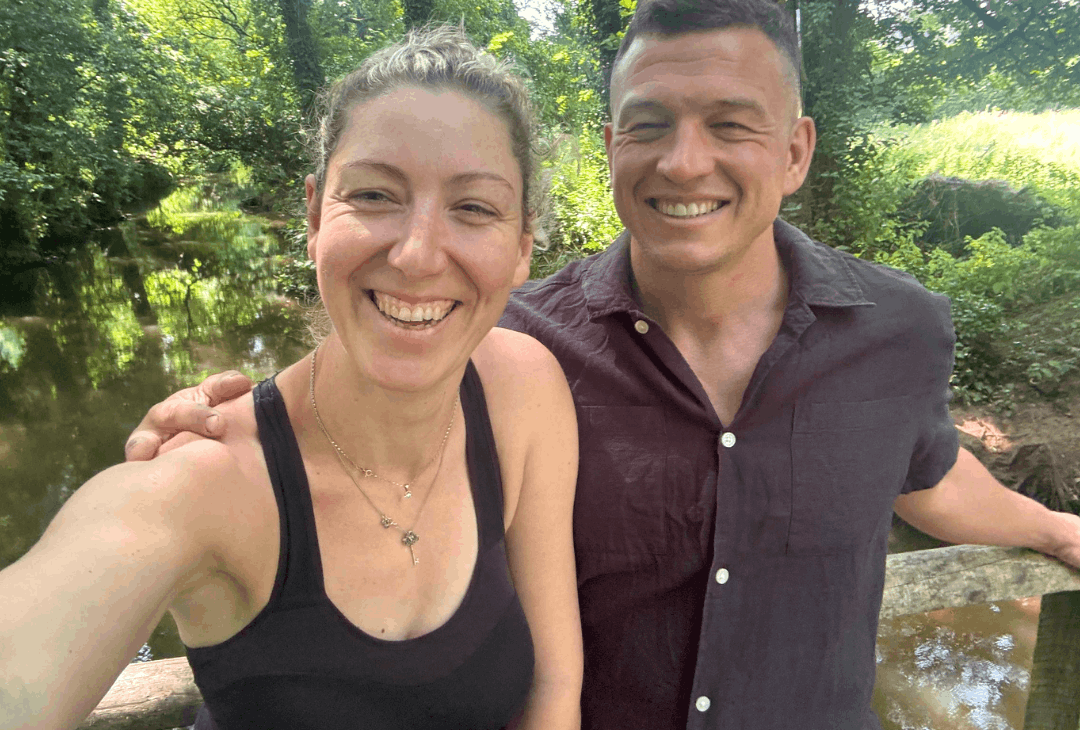
On-brand? Both, maybe. Even smart?
We have also held annual “lifestorms” for the past decade.
We started in the first year of our marriage when we were navigating some big personal decisions. We needed to understand what those decisions meant for us collectively, rather than quietly making separate plans and hoping they matched.
We left that first conversation feeling clear and genuinely aligned.
Now, every Sunday, we talk about how we are feeling, what remains unfinished and what we each need during the week ahead.
Those conversations have carried us through some rocky patches. The kind that could easily have created distance if we had not forced ourselves to stop and actually talk.
Why am I telling you this?
Partly because we recently celebrated our tenth wedding anniversary in a beautiful, secluded treehouse in Somerset, so I am feeling romantic and proud.
But also because I fundamentally believe regular, structured communication is critical to the success of any team.
Even two halves of a marriage need alignment.
Which means, damn sure, no matter how well you and your team get on, you need it too.
Ready to Build This Into Your Business?
A weekly meeting is a powerful place to start. But if the wider business still lacks clear priorities, accountability and dependable ways of working, the operational structure underneath it may need attention too.
Through The Operations Engine Build, I work alongside founders for six months to embed the systems, processes, meeting rhythms and accountability needed for sustainable growth.
If you are ready to reduce overwhelm as a business owner and create a business that can make progress without everything coming back to you, explore my strategic operations services.
For more weekly insight into strategy, systems and the realities of growing a business, you can also join my free Monday Mover newsletter.

Lydia Hawkridge
The Operations Bestie™
I help business owners untangle the operational side of growth by identifying the gaps, bottlenecks, unclear systems and inconsistent processes that can prevent businesses from scaling sustainably.
Stronger operations create stronger foundations for growth. You can explore my operational support services here.
